Role
Full Stack Developer
Product and workflow design
UI/UX design and implementation
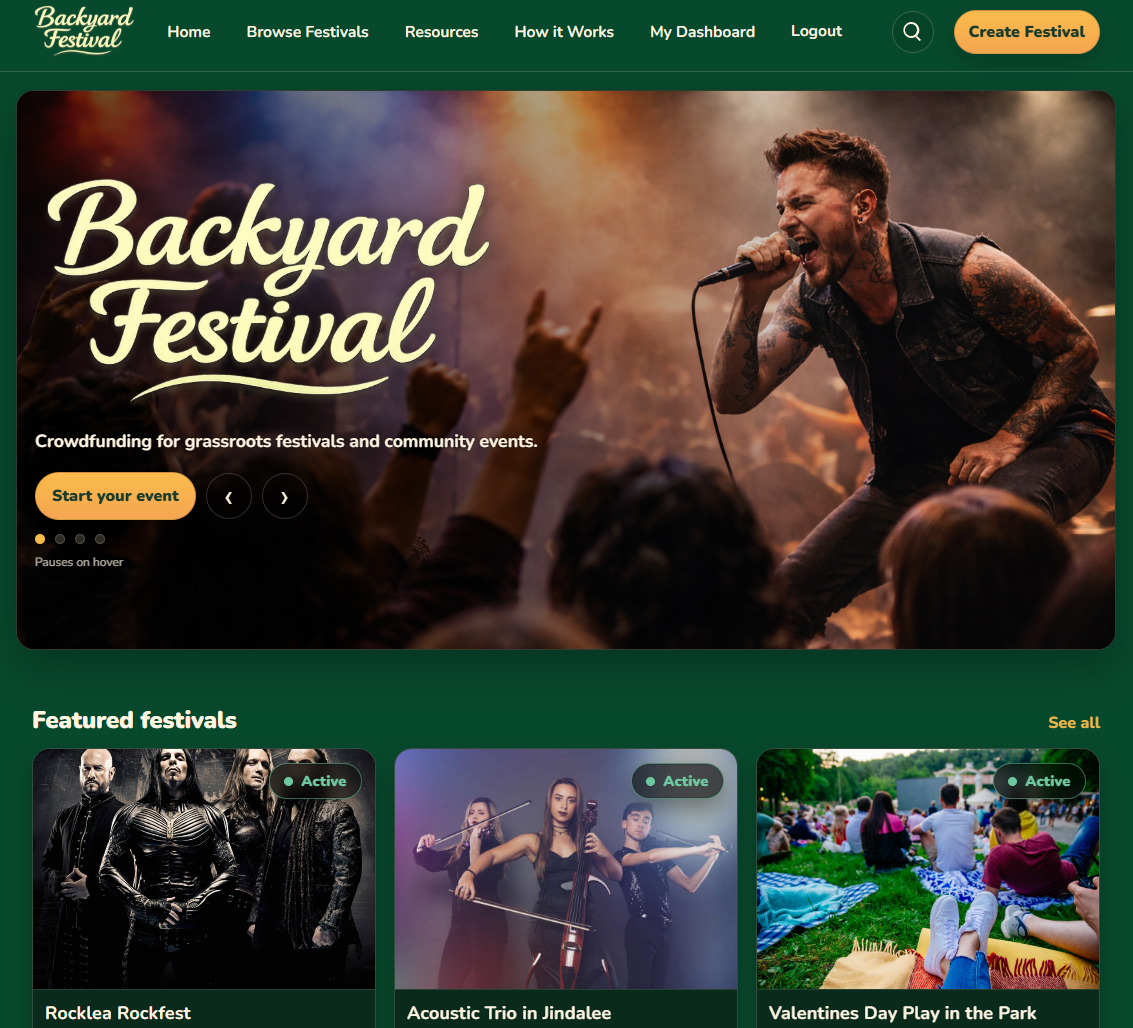
Community-Powered Fundraising Platform
Backyard Festival is a full stack platform designed to help grassroots events raise support in more than one way. Instead of relying on donations alone, it allows supporters to contribute money, time, or physical items, making fundraising more flexible and more practical for real organisers.
Built with React, HTML, CSS, Django REST Framework, and PostgreSQL, Backyard Festival was designed with a strong emphasis on flexible pledge types, reusable fundraiser templates, organiser control, dynamic reward logic, responsive UI, and clear progress tracking across different contribution types.
Many fundraising platforms focus almost entirely on money, but real community events often need much more than financial support alone. Organisers may need volunteers, borrowed equipment, donated items, or a mix of all three, and they often need a practical starting point rather than building every fundraiser from scratch.
That meant designing more than a standard donation flow. Backyard Festival needed to support money, time, and item pledges, item donations as well as loans, reusable templates, cumulative reward logic, reward categories linked to pledge type, organiser approval settings, live progress updates, and clear supporter and organiser experiences, while still remaining easy to use.
I approached Backyard Festival as both a product and engineering challenge. The platform needed to feel simple and inviting for supporters, while also giving organisers enough control to manage different kinds of contributions in a practical way.
I focused on building flexible workflows that reflected how real events operate, including multiple pledge types, reusable templates, reward categories, live status feedback, organiser approval rules, and dashboards for different user roles.
These demos show how the platform combines flexible supporter flows with practical organiser controls and live fundraising feedback.
Flexible support model
Backyard Festival allows supporters to contribute in the way that makes most sense for the event, whether that is money, time, or physical items. Item pledges can be offered as either donations or loans, making the platform more practical for real organisers managing equipment, supplies, and community support.
Responsive pledge tracking
The interface updates automatically as pledges are made, so organisers and supporters can immediately see changes such as volunteer spots dropping from six to five. That live feedback helps the platform feel clear, responsive, and trustworthy.
Supporter reward logic
Backyard Festival supports cumulative reward thresholds for money pledges. If a supporter contributes enough to qualify for multiple reward levels over time, the platform recognises that progress and grants each eligible reward.
Tailored incentive design
Rewards are categorised by contribution type, so organisers can choose what kind of reward makes sense for someone who donates money, volunteers time, donates an item, or loans one. This makes the reward system more flexible and better aligned to how support is actually given.
Guided fundraiser setup
Backyard Festival includes pre-loaded fundraiser templates that organisers can choose and customise for their own event. This makes setup faster, reduces friction, and helps users start with a practical structure instead of building a fundraiser from scratch.
Organiser workflow control
Organisers can manage fundraisers through a dedicated dashboard, review pledges, and decide whether certain contributions need approval before being accepted. Supporters also have their own dashboard view, making the platform easier to navigate from both sides of the experience.
The platform was designed to support money, time, and item pledges within a single system, with item contributions able to function as either donations or loans. That flexibility was central to making the product useful for real events rather than only financial campaigns.
Reusable templates help organisers get started faster and give them a practical structure to adapt for their own event. This reduces friction during setup and makes the product more usable from the very first interaction.
Live counts, progress bars, and dashboard views update as pledge data changes, helping users understand the current state of a fundraiser without extra friction.
The system supports cumulative reward handling, reward categories linked to pledge type, and optional organiser approval rules, allowing the platform to manage more nuanced fundraising scenarios without losing clarity for users.
Backyard Festival stands out because it treats fundraising as an operational problem, not just a payment flow. It supports the different ways people contribute to community events and translates those needs into a structured, responsive user experience that is practical for both organisers and supporters.
I’m especially proud of how much flexibility the platform supports without becoming confusing. Features like multi-type pledges, item loan logic, cumulative rewards, reward categories, reusable templates, approval workflows, live availability updates, dual dashboards, and progress tracking all work together to make the product feel practical, thoughtful, and grounded in real event needs.
Next Case Study
PodFlow shows a different side of my work, with private accountability, layered permissions, verification workflows, and notifications woven through the product.